.png)
What Every Facility Can Learn from the Recent Legionnaires' Disease Response in New York

Recent reports of Legionnaires' disease in New York have drawn national attention and prompted an extensive public health response. Our thoughts are with the individuals, families, and communities affected as health officials continue their investigation.
While each situation is unique and investigations take time to determine the source of exposure, events like these serve as an important reminder of why proactive water management is essential. For facility managers, property owners, and healthcare leaders, the most valuable takeaway is not to wait for an emergency before evaluating building water systems.
Here are five lessons every facility can take from the ongoing response.
1. Prevention Is Always More Effective Than Response
When a case of Legionnaires' disease is identified, public health agencies begin a detailed investigation that may include environmental sampling, reviewing maintenance records, inspecting building water systems, and evaluating potential sources of exposure. These investigations require significant time and resources from both health officials and facility personnel.
A proactive water management program helps facilities identify conditions that may support Legionella growth before they become larger concerns. Routine monitoring, preventive maintenance, and regular system reviews are all part of reducing risk over the long term.
According to the Centers for Disease Control and Prevention (CDC), buildings with complex water systems or those serving higher risk populations should have a water management program designed to reduce the risk of Legionella growth and spread.
2. Cooling Towers Deserve Consistent Attention
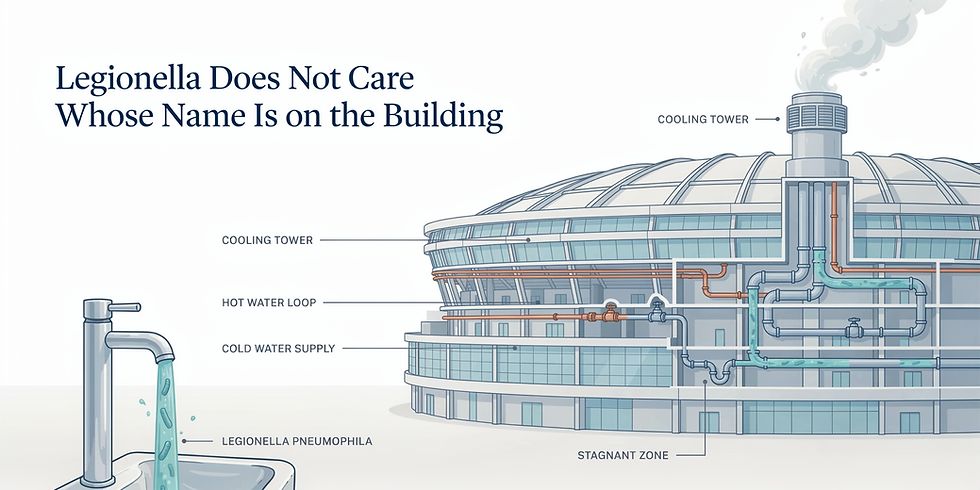
Cooling towers are often evaluated during community investigations because they can generate aerosols that may spread Legionella if the bacteria are present. That does not mean cooling towers are always the source of an outbreak, but it does highlight why proper maintenance, cleaning, treatment, and documentation are so important.
The CDC notes that cooling towers should be considered during investigations because they can disperse water droplets over a wide area, making routine maintenance a critical part of risk management.
Facilities that operate cooling towers should ensure maintenance schedules, treatment programs, inspections, and corrective actions are consistently documented.
3. Documentation Can Be Just As Important As Maintenance
One of the first things investigators may request is documentation.
Maintenance logs, water treatment records, inspection reports, sampling data, and corrective actions all help demonstrate how a facility has been managing its water system.
Organized documentation also allows maintenance teams to identify trends and respond more efficiently when changes occur.
Good recordkeeping is not simply about compliance. It is an important part of understanding how a building's water system performs over time.
4. Every Building Has Different Risks
No two buildings have identical water systems.
Hospitals, senior living communities, hotels, office buildings, schools, manufacturing facilities, and apartment complexes all have different plumbing configurations, occupancy patterns, and operational demands. Seasonal occupancy changes, renovations, infrequently used fixtures, and equipment upgrades can all influence water quality.
Rather than relying on a one size fits all approach, facilities should regularly evaluate how their own systems operate and update water management practices as conditions change.
5. Water Management Is Not a One Time Project
One of the most common misconceptions is that completing a water management plan means the work is finished.
In reality, effective water management is an ongoing process. Building systems evolve, staffing changes, equipment ages, and water usage patterns shift throughout the year.
Regular reviews, preventive maintenance, and continuous improvement help ensure a program remains effective long after it is first implemented.
The facilities that are best prepared are often those that treat water management as part of everyday operations rather than a response to an unexpected event.
Looking Ahead
The recent public health response in New York is a reminder that protecting building water systems requires ongoing attention, thoughtful planning, and a commitment to prevention.
While investigators continue their work, facilities across the country can use this opportunity to review their own water management programs, confirm that maintenance records are up to date, and evaluate whether existing practices continue to meet the needs of their building.
Preparedness is not about reacting to headlines. It is about building systems and processes that help protect occupants every day.
At Legionella Specialties, we believe the strongest water management programs are built on consistency, documentation, and proactive planning. Taking time to review your facility's approach today can help reduce risk and support healthier buildings tomorrow.


Comments