.png)
If Hospital Water Systems Had Personalities

The coworkers every Infection Preventionist knows all too well.
Every hospital has them.
The dependable coworker.
The one who quietly creates problems.
The one who only gets attention when something goes wrong.
Believe it or not, building water systems have personalities too. While pipes and pumps don't actually have attitudes, the way a water system behaves can tell you a lot about its health, and its potential impact on infection prevention.
Let's meet a few familiar faces.
The Overachiever
"I've been working nonstop for years."
This system is the dream employee.
Water circulates as designed. Temperatures stay within target ranges. Disinfectant residuals are maintained, and routine maintenance is part of the schedule, not an emergency response.
It doesn't demand attention because it's doing exactly what it's supposed to do.
Just like the best coworkers, you almost forget it's there.
The Ghost
"I'm flowing... technically."
On paper, everything looks fine.
In reality, water movement is minimal.
Slow flow may not be enough to refresh the line, maintain disinfectant residuals, or discourage biofilm development. It's one of those issues that often goes unnoticed because there aren't any obvious warning signs.
Quiet doesn't always mean healthy.
The Hoarder
"I might need this pipe someday."
Unused patient rooms.
Abandoned piping.
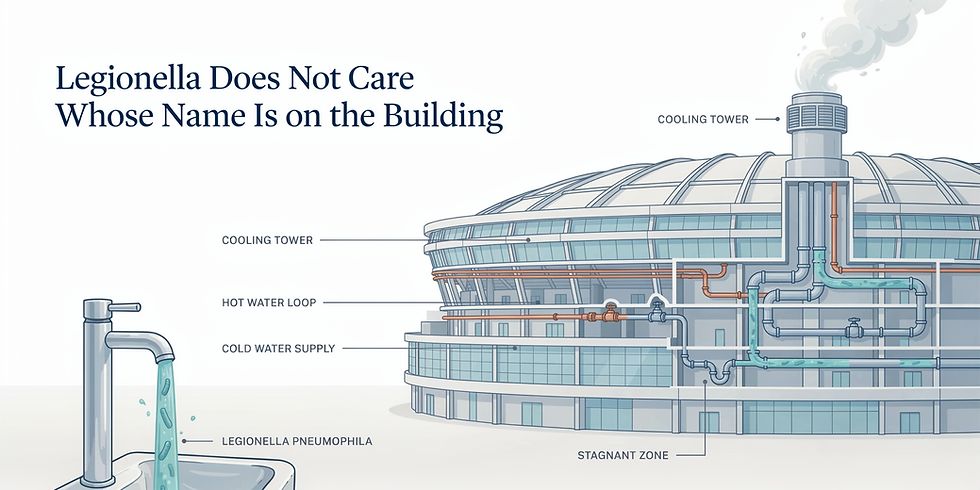
Dead legs.
Sections of plumbing that haven't seen meaningful water movement in months or even years.
Stagnant water creates opportunities for biofilm to develop, which can increase the likelihood of waterborne pathogens persisting within the system.
Sometimes the safest solution is letting go of infrastructure that no longer serves a purpose.
The Rule Follower
"I passed the inspection."
That's a great start.
But infection prevention doesn't stop when the survey is over.
A compliant water management program should also be an effective one. Routine monitoring, trend analysis, corrective actions, and continuous improvement are what help reduce risk over time.
Checking the box is important.
Protecting patients is the real objective.
The Drama Queen
"Everything was fine... until construction started."
A renovation begins.
A wing closes.
Occupancy changes.
A valve is replaced.
Suddenly, water temperatures shift, flow patterns change, and the water management team is working to understand what happened.
Building water systems are dynamic. Even routine operational changes can affect water quality, which is why communication between Facilities, Engineering, and Infection Prevention is so important.
The Quiet Professional
"I just do my job."
No surprises.
No last-minute emergencies.
No unexpected trends.
Just a well-maintained system supported by routine flushing, monitoring, testing, preventive maintenance, and a team that stays proactive.
It's not flashy.
It doesn't make headlines.
But it's exactly the kind of system every healthcare facility hopes to have.
The Takeaway
The truth is, every building water system has its own personality.
The good news? Personalities can change.
With a thoughtful Water Management Program, regular monitoring, and collaboration between Facilities and Infection Prevention teams, even the most "difficult" systems can become more predictable and more resilient.
At Legionella Specialties, we help healthcare facilities understand how their water systems behave so they can identify risks early, strengthen their programs, and support safer environments for patients, staff, and visitors.
Because when it comes to infection prevention, the best water system is the one that quietly does its job every single day.


Comments