.png)
The Invisible Wins: Celebrating What You Don’t See in Water Safety

When a building water system is working properly, nobody notices.
There are no headlines. No emergency meetings. No outbreak investigations. No patients becoming sick from something that should have been preventable.
And honestly, that is the goal.
In healthcare and large building environments, success in water safety often looks like absolutely nothing happening at all. That may not sound exciting, but behind every quiet day is a tremendous amount of work, planning, monitoring, and consistency.
That is something worth celebrating.
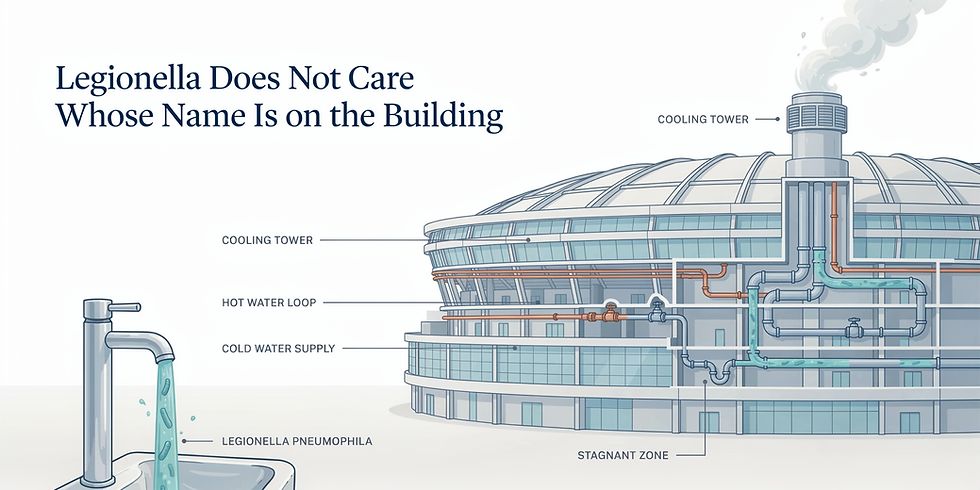
The reality is that building water systems are incredibly complex. Hospitals, long-term care facilities, hotels, and large commercial buildings all create environments where water can stagnate, temperatures can fluctuate, and biofilm can develop. Under the right conditions, bacteria such as Legionella can grow and spread through premise plumbing systems. The CDC and ASHRAE both emphasize the importance of proactive water management programs to reduce those risks.
But here is the part most people never see:
Every day that a facility maintains safe water conditions, protects vulnerable occupants, and avoids a waterborne incident is a quiet win happening behind the scenes.
Those wins are built on consistency.
Consistent disinfectant residuals.
Consistent monitoring.
Consistent flushing practices.
Consistent review of system performance and corrective actions when needed.
The CDC notes that effective water management programs are the primary strategy for controlling Legionella growth and reducing the risk of transmission in healthcare facilities.
That means “safe” is not something facilities achieve once.
It is something they maintain every single day.
A lot has to go right for water systems to remain stable and effective. Teams must understand how water moves through the building. Control measures need to be monitored. Temperatures, disinfectant levels, and system conditions all matter. The CDC specifically recommends ongoing monitoring and corrective action processes as part of a comprehensive water management strategy.
And behind all of that are people.
Facilities teams. Infection preventionists. Engineers. Water management professionals.
These are the people quietly protecting patients, residents, staff, and visitors every day without most people ever realizing it.
They are the reason many buildings never experience a serious waterborne event.
That deserves recognition.
One of the biggest shifts happening in the industry right now is the movement from reactive thinking to proactive prevention. Instead of waiting for a problem to appear, more facilities are investing in long-term water management strategies designed to reduce risk before issues occur.
ASHRAE Standard 188 was developed specifically to create structured risk management approaches for building water systems, helping facilities move beyond reactionary responses and into ongoing prevention.
That is an important mindset shift.
Because safe water is not luck.
It is preparation. It is monitoring. It is consistency. It is people paying attention long before something becomes visible.
At Legionella Specialties, we believe some of the most important victories are the ones nobody ever sees. The clean reports. The stable systems. The quiet quarters where nothing goes wrong because the right processes were already in place.
The best water management programs do not create headlines.
They create peace of mind.


Comments